
What is the alloy steel for truck chassis assemblies
Discover the technical specifications and metallurgical advantages of alloy steel used in truck chassis assemblies, focusing on HSLA grades like S700MC and their mechanical performance.
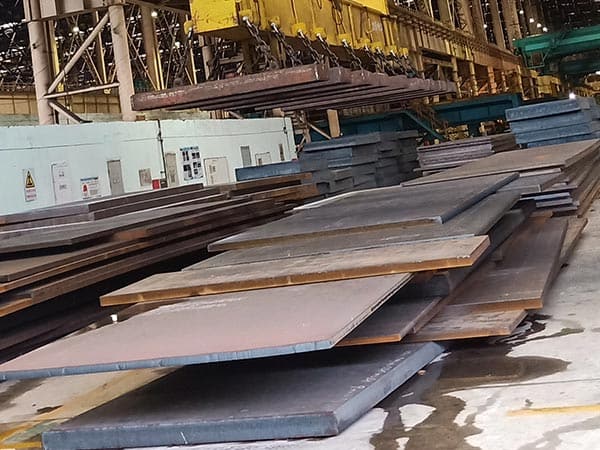
The Structural Foundation: Understanding Truck Chassis Steel
The chassis of a heavy-duty truck is frequently referred to as its backbone, providing the essential structural integrity required to support the engine, drivetrain, cabin, and payload. When addressing the question of what is the alloy steel for truck chassis assemblies, the industry standard has shifted decisively toward High-Strength Low-Alloy (HSLA) steel. Unlike traditional carbon steels, HSLA steels are engineered with precise micro-alloying elements that enhance mechanical properties without significantly increasing weight. This transition is driven by the global demand for higher payload capacities and improved fuel efficiency, necessitating materials that offer a superior strength-to-weight ratio.
The Dominance of HSLA and Thermomechanically Rolled Steels
Modern truck frames primarily utilize HSLA steels produced through the Thermomechanical Control Process (TMCP). These steels, such as the European standard S500MC, S600MC, and S700MC, or the American ASTM equivalents, are characterized by their low carbon content (typically below 0.12%) and the addition of alloying elements like Niobium (Nb), Vanadium (V), and Titanium (Ti). These elements facilitate grain refinement, which is the primary mechanism for increasing yield strength while maintaining excellent toughness and weldability. The "MC" suffix denotes that the steel is thermomechanically rolled, a process that creates a fine-grained microstructure that is far more resilient than traditional hot-rolled or normalized steels.
Mechanical Performance: Yield Strength and Fatigue Resistance
The primary requirement for a truck chassis is high yield strength. A higher yield point allows the frame to deflect under load and return to its original shape without permanent deformation. For instance, S700MC steel offers a minimum yield strength of 700 MPa, which is more than double that of standard structural steel (S355). This allows engineers to reduce the thickness of the chassis rails, leading to a lighter vehicle. However, strength is not the only factor. Fatigue resistance is critical because a truck chassis undergoes millions of stress cycles during its service life. The fine-grained structure of HSLA alloy steel provides a higher endurance limit, ensuring that the frame does not develop cracks under the constant vibration and torsion of long-haul transport.
Comparative Analysis of Common Chassis Steel Grades
Selecting the right grade involves balancing cost, weight, and manufacturability. The following table illustrates the typical mechanical properties of the most common alloy steels used in truck chassis assemblies:
| Steel Grade (EN 10149-2) | Min. Yield Strength (MPa) | Tensile Strength (MPa) | Min. Elongation (%) | Typical Applications |
|---|---|---|---|---|
| S355MC | 355 | 430 - 550 | 19 | Light-duty frames, cross members |
| S420MC | 420 | 480 - 620 | 16 | Medium-duty truck components |
| S500MC | 500 | 550 - 700 | 12 | Heavy-duty longitudinal beams |
| S700MC | 700 | 750 - 950 | 10 | Ultra-lightweight high-capacity chassis |
Process Performance: Formability and Weldability
A chassis is rarely a straight beam; it requires complex bending, punching, and welding. Therefore, the process performance of the alloy steel is just as vital as its strength. Cold formability is a standout feature of HSLA steels like S700MC. Despite their high strength, these steels possess sufficient ductility to be bent with a tight radius (typically 1.0 to 1.5 times the thickness) without edge cracking. This allows for the creation of C-channels and complex brackets that distribute stress more effectively.
Furthermore, weldability is paramount. Because HSLA steels have a low carbon equivalent (Ceq), they are less susceptible to cold cracking in the heat-affected zone (HAZ) during MIG/MAG welding. This ensures that the welded joints between the longitudinal rails and cross members are as robust as the base metal itself, maintaining the integrity of the entire assembly under heavy torsional loads.
Environmental Adaptability and Longevity
Trucks operate in diverse and often harsh environments, from sub-zero arctic temperatures to humid coastal regions. The alloy steel used in chassis must exhibit low-temperature toughness. Steels like S700MC are tested for impact energy at -20°C or even -40°C to ensure they do not become brittle and snap under sudden shocks in cold climates. Additionally, while HSLA steel has some inherent atmospheric corrosion resistance due to its alloying content, most chassis assemblies are treated with advanced coatings such as electrophoretic painting (E-coating) or hot-dip galvanizing to prevent rust and extend the vehicle's operational lifespan to over 15 years.
The Shift Toward Ultra-High Strength Steel (UHSS)
As the logistics industry pushes for even greater efficiency, there is a growing trend toward Ultra-High Strength Steels (UHSS) with yield strengths exceeding 900 MPa. These materials allow for extreme weight reduction, which is particularly valuable for electric trucks where the battery weight must be offset to maintain payload capacity. However, using these grades requires specialized manufacturing techniques, including laser cutting and precision bending, as the material's springback becomes more pronounced at higher strength levels. The integration of these advanced alloy steels represents the cutting edge of automotive engineering, ensuring that the next generation of trucks is safer, lighter, and more sustainable.
Strategic Selection for Global Manufacturing
Manufacturers must consider the global availability of these grades. While S700MC is a staple in the European market, equivalent grades like JSH780 in Japan or specific proprietary grades from major mills are used elsewhere. The key for any chassis assembly is ensuring that the chemical composition—specifically the levels of Manganese, Niobium, and Titanium—is strictly controlled to provide consistent performance across different batches. This consistency is what allows automated robotic welding and assembly lines to function without frequent adjustments, directly impacting the economic viability of truck production.
Leave a message