
What is s700mc steel equivalent in india structural steel?
Identify the Indian equivalent for S700MC high-strength steel. This guide compares EN 10149-2 S700MC with IS 2062 E700, detailing mechanical properties, chemical composition, and application insights.
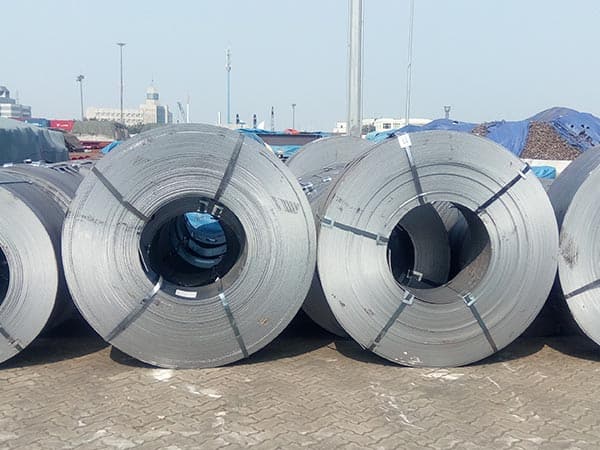
Defining S700MC High-Strength Steel and Its Global Relevance
S700MC is a high-strength low-alloy (HSLA) structural steel produced through a thermomechanical rolling process (TMCP). It is defined by the European standard EN 10149-2. The 'S' stands for structural steel, '700' represents the minimum yield strength of 700 MPa, and 'MC' indicates the thermomechanically rolled condition with excellent cold-forming properties. This material has become a cornerstone in modern engineering where weight reduction (lightweighting) is paramount without sacrificing structural integrity.
The Indian Structural Steel Landscape and S700MC Equivalency
Engineers and procurement specialists in India often seek local equivalents to international standards to optimize logistics and costs. The primary standard governing structural steel in India is IS 2062, published by the Bureau of Indian Standards (BIS). For a high-performance grade like S700MC, the direct equivalent within the Indian framework is IS 2062 E700. While IS 2062 was traditionally associated with lower-grade steels like E250 (Fe410), the standard has evolved to include high-yield strength categories to meet the demands of advanced infrastructure and automotive sectors.
| Standard | Grade | Yield Strength (min) | Tensile Strength | Elongation (min) |
|---|---|---|---|---|
| EN 10149-2 | S700MC | 700 MPa | 750-950 MPa | 10-12% |
| IS 2062:2011 | E700 (Quality BR/BO/C) | 700 MPa | 750-950 MPa | 12% |
| ASTM (US) | A1011 Grade 100 | 690 MPa | 760 MPa | 10-12% |
| GB/T (China) | Q700D/E | 700 MPa | 750-950 MPa | 12% |
Chemical Composition: A Study in Micro-Alloying
The performance of S700MC and its Indian counterpart, IS 2062 E700, relies on a precise balance of chemical elements. Unlike traditional carbon steels, these grades utilize micro-alloying elements such as Niobium (Nb), Vanadium (V), and Titanium (Ti) to achieve high strength through grain refinement. The carbon content is kept exceptionally low (usually below 0.12%) to ensure superior weldability and toughness.
- Carbon (C): Low carbon levels minimize the risk of brittle fractures and improve the heat-affected zone (HAZ) properties during welding.
- Manganese (Mn): Enhances hardenability and tensile strength while maintaining ductility.
- Silicon (Si): Acts as a deoxidizer and contributes to strength.
- Phosphorus and Sulfur (P/S): Kept at ultra-low levels to ensure internal cleanliness and impact resistance.
- Micro-alloys (Nb, V, Ti): These elements form carbides and nitrides that pin grain boundaries during the TMCP process, resulting in a fine-grained microstructure.
Mechanical Superiority and Structural Efficiency
The primary advantage of utilizing S700MC or IS 2062 E700 lies in the Strength-to-Weight Ratio. By substituting standard E250 steel with E700, engineers can reduce the thickness of structural components by up to 40-50% while maintaining the same load-bearing capacity. This leads to significant fuel savings in mobile machinery and lower material costs in large-scale constructions.
Impact toughness is another critical attribute. For S700MC, the standard often specifies impact energy values at sub-zero temperatures (e.g., 40J at -20°C or -40°C), ensuring the steel remains ductile in harsh environmental conditions. In the Indian context, selecting the right 'Quality' grade (such as Quality C for low-temperature applications) within the IS 2062 E700 specification is essential for ensuring environmental adaptability.
Fabrication and Processing Performance
High-strength steel is often perceived as difficult to process, but S700MC and IS 2062 E700 are specifically engineered for fabrication ease. Weldability: Due to their low Carbon Equivalent (CEV), these steels can be welded using conventional methods like GMAW (MIG/MAG) or SAW without the extensive preheating required by traditional high-strength steels. Cold Forming: The 'MC' designation emphasizes the steel's ability to be bent and folded. It features a tight minimum bending radius, which is vital for manufacturing complex chassis frames and crane booms. Laser Cutting: The clean internal chemistry and uniform surface quality of these grades make them ideal for high-precision laser and plasma cutting, resulting in smooth edges and minimal distortion.
Expanding Applications Across Indian Industries
The adoption of IS 2062 E700 is accelerating across various high-growth sectors in India. In the Heavy Transport industry, it is used for truck trailers, tippers, and tankers to maximize payload. The Construction and Lifting sector utilizes this steel for telescopic cranes, aerial work platforms, and concrete pump arms where high reach and low weight are critical. Additionally, the Earthmoving Equipment industry incorporates these grades into the frames of excavators and loaders to withstand extreme cyclic loading and fatigue.
Strategic Procurement and Selection Criteria
When sourcing S700MC equivalents in India, it is vital to verify the mill test certificates (MTC) against the specific requirements of the project. While IS 2062 E700 is the official equivalent, some projects may still specify EN 10149-2 due to global design protocols. It is important to ensure that the supplier provides the TMCP (Thermomechanically Rolled) version rather than a Quenched and Tempered (Q&T) steel, as the processing characteristics differ significantly. Understanding the subtle differences in elongation and impact testing between the Indian and European standards will ensure that the final structure meets both safety and performance benchmarks.
Leave a message